
Amazon just blocked Meta's AI shopper. Should your brand let the robots in?
 By John Crockett, . 6 min read
Key takeaways
- Amazon blocked Meta's Muse agent from shopping its site in September, and it's fighting Perplexity in court over the same question: can an AI agent shop for your customers?
- Amazon can afford to build a wall. Most brands can't. If an agent can't buy from you, it will buy from someone who lets it.
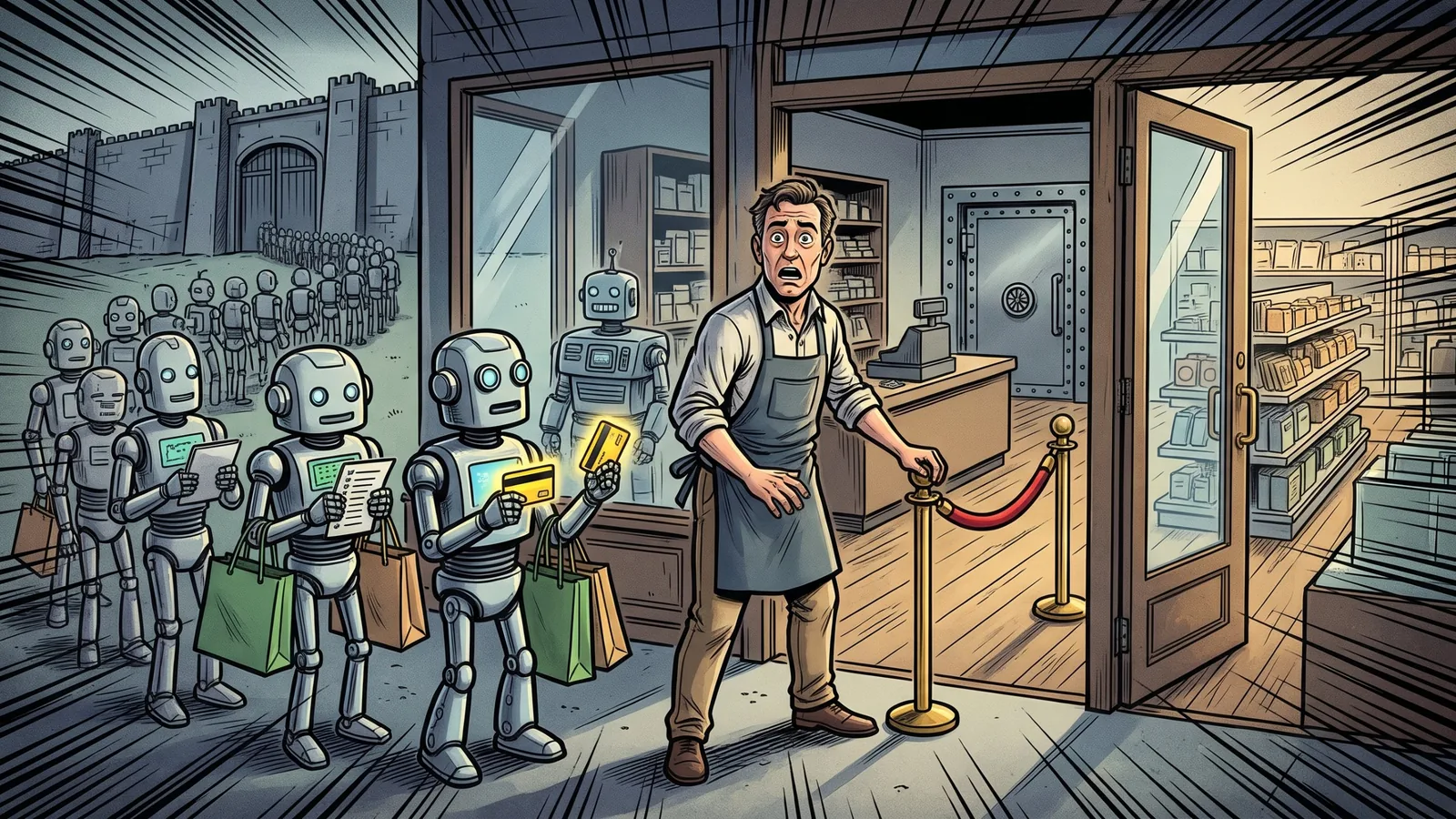
- Don't choose between wide open and fully blocked. Use a simple framework instead: front door, velvet rope, locked room.
Picture sending an AI agent to the corner convenience store to grab you a soft drink. The agent walks up to the door, and the store locks it and hangs a sign: no robots allowed.
Sounds silly. But it's essentially what Amazon started doing to Meta's new Muse agent in September. When Muse tries to shop on Amazon, people get a pop-up saying the agent violates Amazon's terms of use.
For 20 years, security teams lived by a simple rule: bots are threats, so block them. That rule made sense when bots were scrapers and spammers. It makes a lot less sense now that some of those bots are carrying a customer's credit card.
We just watched this movie with AI crawlers. I wrote about how the decades-old deal between Google and websites broke, and why blocking crawlers usually backfires. Now we're getting the sequel. This time, the bot is holding your customer's wallet.
What actually happened (and why Amazon has a point)
Meta launched Muse on September 8. It's a personal AI agent that sends emails, books travel and buys things using the accounts and payment methods people connect to it.
Amazon asked Meta to remove Amazon from what Muse can do. Meta declined, so Amazon started blocking it. Amazon's position is that third-party shopping apps should "operate openly and respect service provider decisions."
This isn't Amazon's first fight like this. It sued Perplexity over its shopping agent in November 2025 and won an injunction in March 2026. Then a federal appeals court threw that injunction out in August, saying Perplexity's assistant "operates as a tool acting on the user's instructions." The case is still going.
To be fair to Amazon, its concerns are real. Its own CEO has said shopping agents often get prices and product details wrong. Amazon also has every reason to protect its customer relationships, its advertising business and its own AI shopping tools.
Reasonable people can land on either side of this. I land on the side of caution, not walls.
Amazon can build a wall. You probably can't.
Amazon is the destination. People go there on purpose. Most brands are one option among many, and an agent will cheerfully skip a brand that makes it hard to buy.
And agents are already sending real customers. Adobe found that AI traffic to US retail sites grew 393% year over year in the first quarter of 2026. Even better, that traffic converted 42% better than non-AI traffic. A year earlier, it converted worse.
Not every big retailer is building walls, either. Walmart went the other way and plugged into ChatGPT's Instant Checkout, so people can buy from Walmart without leaving the chat.
It's the same lesson as AI crawlers. Block the crawler, and the AI cites someone else. Block the agent, and it buys from someone else.
The risks are real, too
I'm not saying open the floodgates. I've researched Muse a lot, and I won't use it myself until I set up a sandboxed environment where it can't touch anything I really care about. Agents that can read your email and spend your money deserve a healthy dose of suspicion.
For brands, three risks stand out:
- Bad data. An agent misreads your price, your stock or your return policy, and you get the angry customer.
- Lost relationships. The agent owns the conversation, the customer data and maybe the next recommendation. You risk becoming a warehouse with a logo.
- Fraud. Bad bots can pretend to be good agents. Telling them apart is hard.
There's a bigger question underneath all of this. When a handful of companies run the agents that sit between consumers and every brand they buy from, those companies gain enormous influence over who gets chosen. That's incredible for convenience and a little terrifying for everyone else. All the more reason to stay in the conversation instead of locking yourself out of it.
Build a front door for agents
You don't have to pick between wide open and fully blocked. I think about it in three zones: front door, velvet rope, locked room.
1. Front door: open to everyone. Product pages, prices, availability, reviews and policies should be easy for any agent to read. Use structured data, keep your product feeds accurate and write your return policy in plain language. If an agent gets your price wrong, part of that problem is often your content, and you can fix it.
2. Velvet rope: open to verified agents. Actions like checkout, account access and order changes should be reserved for agents that prove who they are. That's getting easier. Visa, Mastercard and Cloudflare are building standards that let agents prove their identity and show whether they're browsing or buying. Start with the platforms you already trust and the agent checkout programs they offer.
3. Locked room: off-limits. Proprietary data, members-only content and anything that is your actual product stay locked. Be surgical, the same way you should be with AI crawlers.
Then put it into practice:
- Audit your bot rules. Many brands block legitimate agents by accident through default bot protection settings. Find out what yours actually does.
- Test your top products. Ask ChatGPT, Gemini and other agents to find and buy your 20 best sellers. Note every wrong price, missing size and confused policy, then fix the source.
- Decide who owns this. It shouldn't be only a security decision. SEO, ecommerce, legal and brand all need a seat at the table. In my view, the SEO team is already closest to this work, because it's the team that already thinks about how machines read your site.
The robots are already shopping
The question isn't whether AI agents will shop your site. They already are, or they're trying to. The question is what they find when they get there.
Walls protect the brands people can't avoid. Everyone else needs a front door.
Can AI agents legally shop on my website?
The law is still being settled. Amazon sued Perplexity over its shopping agent and won an injunction in March 2026, but a federal appeals court overturned it in August, saying the agent acts as a tool on the user's instructions. The case is ongoing, so check with your legal team before blocking or allowing agents, and spell out your rules in your terms of use.
Should I block AI shopping agents like Meta's Muse?
Usually not completely. Blocking every agent means losing customers who shop that way, and AI-referred traffic is growing fast and converting well. A better approach is to be selective. Keep product information open, let only verified agents complete checkout, and protect content and data that are your actual product.
How do I make my products easier for AI agents to buy?
Start with accurate, machine-readable product information, including structured data, current prices, stock and clear return policies. Check that your bot protection isn't blocking legitimate agents by accident, test your top products in tools like ChatGPT and Gemini to see what they get wrong, and look at agent checkout programs from the platforms you already use.