
Forget the PR Firm. You Are Now the Media Source.
Let’s demystify where earned media is going as we approach 2026. For the last two decades, “earned media” meant paying a PR firm a ridiculous retainer to spam a list of journalists who didn’t know or care about your brand. They might get you a few low-value mentions—maybe a link in a roundup of “best [product category]’s”—but you rarely saw a dollar-for-dollar return on that investment.
The traditional PR playbook is dead.
The rules have flipped in the current media landscape. It’s a world dominated by shrinking newsrooms, micro-niche publications, and generative AI systems that need high-trust sources. The most valuable earned media is no longer about getting a mention; it’s about becoming a cited entity.
This shift is the biggest free revenue opportunity of the decade. Why? Because the mentions and backlinks you earn using this strategy aren’t just for ego; they are fundamental building blocks for your brand’s digital authority, boosting your SEO, your E-E-A-T (Experience, Expertise, Authoritativeness, and Trustworthiness), and your share of voice in the places that matter most.
Here is the three-part strategy to earn high-value media mentions in 2026, all without writing a single retainer check.
1. The Entity Play: Become The Definitive “Source”
The rise of generative AI tools like Google’s AI Overviews means that your brand is no longer just competing for a click on a search results page. You are competing to be the cited fact in an AI-generated answer.
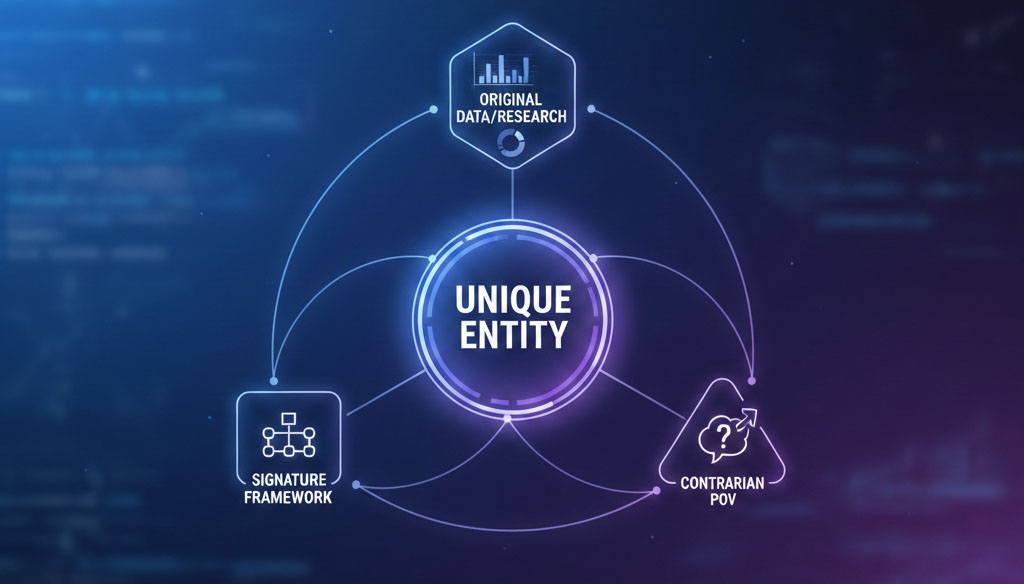
To win this, you must build a Unique Entity.
A Unique Entity is a piece of information, a concept, a data set, or a framework that is exclusive to your brand. It’s a proprietary asset that a journalist, analyst, or AI system is compelled to cite because no one else has it.
Your Blueprint for a Unique Entity:
- Original Data/Research: This is the platinum standard. You need to publish data that only you could possess.
- Example: Instead of “The State of E-commerce,” publish “The 2026 Q1 Report on Shopping Cart Abandonment Rates in the D2C Beauty Niche,” complete with a specific number and an original trend graphic.
- Why it works: A reporter covering the retail industry needs a specific, recent, citable stat to support a point. Your proprietary data is irreplaceable.
- The Signature Framework: Create a simple, memorable model for a complex problem. You can’t copyright an idea, but you can own the language and the visual of a framework.
- Example: The John Crockett “Triple-A Authority Model” (Assess, Aggregate, Amplify). Make it a visual graphic and cite it in every piece of content.
- Why it works: When a high-level blog or publication wants to explain a strategy, they will reference and link to your model, effectively giving you credit for the entire concept.
- The Contrarian POV (Point of View): Be the expert who publicly, intelligently, and with data, challenges an industry-wide assumption.
- Example: “Why the 4-Day Work Week is a Disaster for Long-Term Growth (And the Data to Prove It).” This is clickbait for journalists because it creates instant tension and an easy headline.
- Why it works: Journalists are driven by conflict and novelty. A well-argued, data-backed contrarian take is a story in itself.
2. The Thought Leadership Trap: Volume is The Enemy
If you want to be treated like an authority, stop publishing like a commodity. Most people treat thought leadership as a volume game: post on LinkedIn every day, write a thousand-word blog every week.
The New Rule: Trade volume for scarcity and strategic alignment.
Your goal isn’t to be a consistent publisher; it’s to be the Advisor to the Industry. This means strategically positioning yourself (or your most compelling executive) as the expert on micro-topics that are currently trending.
- Reactive Expert Commentary: Stop sending cold emails. Start using services like HARO (Help a Reporter Out) or Qwoted, or simply track major industry publications for articles mentioning your competitors. When a reporter is writing about a breaking story (e.g., a new SEC regulation, a major market shift, or a competitive failure), your job is to deliver a perfectly quoted, two-sentence, expert-level take within the hour.
- The Pitch Secret: Don’t pitch your company. Pitch your insight. Your email should be 100 words max, and include: the specific, citable quote; your name/title; and a link to your Unique Entity (your proprietary data).
- Target the Micro-Media: Major newspapers are great, but the highest-impact backlinks often come from niche industry newsletters, specialized trade publications, and authoritative Substack writers. These outlets are read by your exact target customer and are often a purer authority signal for AI systems.
- Actionable Step: Identify 10-15 niche industry newsletters your clients read. Pitch them a custom, 250-word exclusive analysis or a guest graphic that cites your Unique Entity.
3. The Digital Tidy-Up: Converting Mentions into Links
The final, and most frequently missed, step of the new earned media game is link conversion. In 2026, an unlinked brand mention is a lost opportunity for both SEO and E-E-A-T.
Google is getting better at using unlinked brand mentions as a ranking signal, but a direct, authoritative link is still the ultimate currency.
The Unlinked Mention Strategy:
- Set Up Alerts: Use tools like Google Alerts, Brandwatch, or Ahrefs to set up alerts for your:
- Brand Name
- Product Names
- Executive Names
- Your Unique Entity (e.g., “Triple-A Authority Model”)
- The Audit & Outreach: Every week, review all new mentions. If a high-authority site (like an industry trade pub, university, or major news site) mentions your brand or executive without linking back to your site, that’s a winnable link.
- The Perfect Link Request: Do not use generic, demanding language. Send a polite, helpful email to the author or editor:“Hi [Name], I saw your excellent piece on [Topic] and was thrilled to see you mentioned our [Unique Entity]. We’ve found that article on our site to be a helpful resource for readers looking to dive deeper into the methodology. To make it easier for your audience to check out the underlying data, would you mind adding a link to the phrase ‘[Name of Unique Entity]’ and linking it here: [Your URL]?”
It works because the request is not for you; it’s for the reader. You are offering to improve their content’s value.
The Free Revenue Mindset
Earned media in 2026 isn’t a press stunt; it’s an asset-creation strategy. You are no longer paying a firm to rent visibility. You are building irreplaceable intellectual property (your Unique Entity) and strategically deploying it (Thought Leadership) to build the digital infrastructure (High-Value Mentions/Links) that turns authority into free, consistent, and measurable revenue.
Stop chasing the news cycle. Become the gravity well that draws the news to you.