tl;dr: I used the holiday break to build a complex web app prototype using Gemini and Antigravity. I know very little Python and I’d never even heard of Django, but by letting AI handle the coding and architecture, I was able to build a “stealth” MVP with complex database features (like ubiquitous search) in hours. The main advantage of AI coding isn’t just speed—it’s the ability to pivot and change scope instantly without the penalty of wasted time.
I have had an idea for a web app percolating in my brain for years.
It wasn’t a content site or a landing page. It was a complex engine designed to source products and services for sale across the web. We are talking about massive databases and the kind of heavy lifting that makes sourcing thousands (someday millions) of options a nightmare.
For over a decade, that idea sat on the shelf. Why? Because I’m not a real computer programmer. I can build you a WordPress site no problem, and I can hack together some HTML and CSS, but when it comes to building a scalable web app with Python and Django? I was operating at a zero.
Over the holiday break, I decided to change that. I didn’t enroll in a bootcamp. I didn’t hire a dev shop. I spent the week vibe coding—using AI to bridge the gap between my product vision and the raw code required to execute it.
The result? A working MVP that I built from my home, running locally on my machine, powered by a tech stack I still don’t fully understand.
Here is how Gemini, the new Antigravity IDE, and a total disregard for “proper” planning got my project off the ground.
Putting My AI Interns to Work
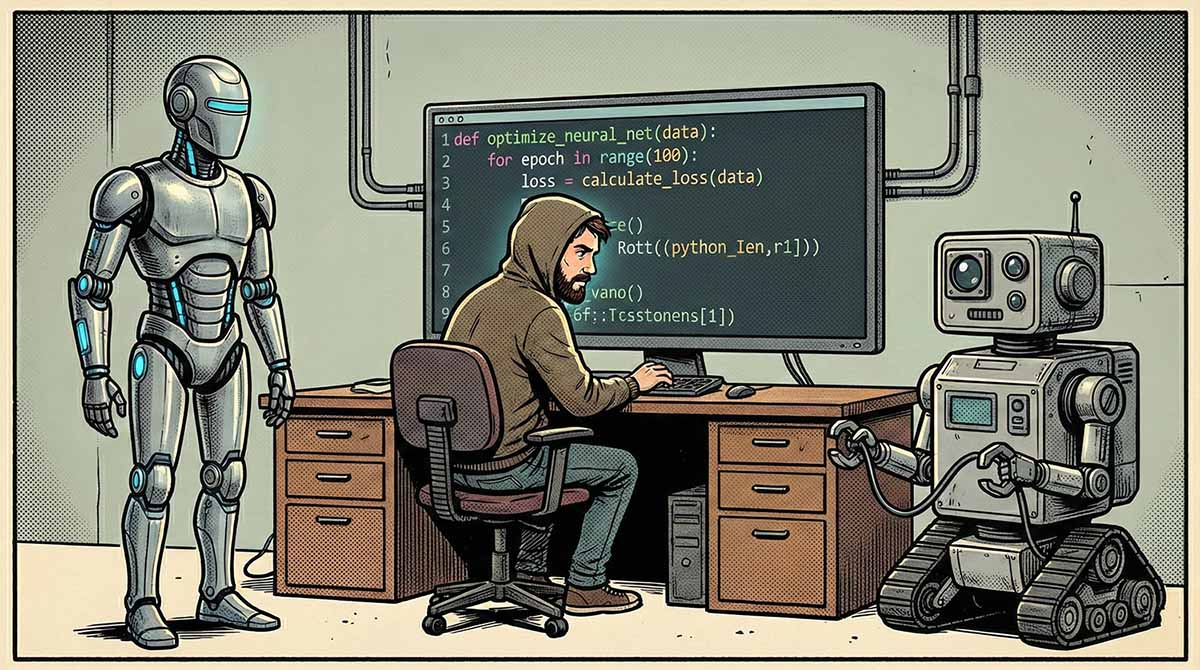
To pull this off, I had to stop thinking like a solo founder and start thinking like a manager. I wasn’t going to write the code; I was going to direct the talent.
- The Technical Product Manager (Gemini Pro): My role was to have the vision. Gemini’s role was to translate that vision into architecture. I would bounce ideas off Gemini, and it would explain how to build it—suggesting the Django framework to handle the database complexity that WordPress would have choked on.
- The Developer (Antigravity IDE): This was the game-changer. Antigravity isn’t just a text editor; it’s an agent. I took the commands and logic Gemini gave me, fed them into Antigravity using natural language, and let the agent make sense of it.
I did almost zero coding. I provided the layman’s instructions and the AI provided the syntax.
The “Ubiquitous Search” & The Power of Scope Creep
In traditional software development, “scope creep”—adding new features mid-build—is a dirty word. It destroys timelines and budgets. And like most marketers, I am definitely guilty of scope creep with some of my work projects.
In vibe coding, scope creep is the superpower.
Midway through the build, I had a whim. I realized the app needed a ubiquitous search bar capable of querying every product and service in the database instantly. In a traditional workflow, that’s a ticket, a meeting, and a “maybe in Q2” conversation.
With my AI team, I just asked for it.
I told Gemini what I wanted. Gemini briefed Antigravity. Five minutes later, I had a fully functional search bar running on my localhost.
This is where the deficit lies for those ignoring these tools. If you aren’t using AI, you are forced to map everything out perfectly from the beginning because the cost of changing your mind is too high. You have to plan to avoid tangents.
When you vibe code, you can delete hundreds of lines of code and rework the entire architecture to accommodate a tangent, and it costs you nothing but a few prompts.
It Wasn’t Magic (But It Felt Magical)
Let’s be clear: this isn’t how enterprise-grade software should be shipped yet.
There were plenty of moments where the translation broke down. I expected hallucinations, but the reality was more blunt—sometimes the code changes just broke the site. For a lightly-technical marketer, seeing a screen full of error messages used to be a project-ender.
But this time, it was just part of the loop.
- “Hey, that last update broke the database connection.”
- “Revert that change and try this method instead.”
The resilience of the AI workflow meant that failure was temporary and fixable.
The Prototype Advantage
I am not deluding myself. My holiday project likely has security holes, latency issues, and a spaghetti-code backend that would make a senior engineer weep.
But it works.
I now have a functional prototype that I can hand to a real developer and say, “Make this, but enterprise-ready.” I’m not handing them a Word doc of requirements; I’m handing them a vision they can click through.
Vibe coding isn’t going to replace complex engineering for high-stakes apps overnight. But if you are sitting on an idea because you “don’t know how to code,” that excuse is officially expired.
The new rules of prototyping favor the bold, the curious, and those willing to let the AI handle the syntax while they handle the strategy.
Vibe Coding FAQs
It’s basically using AI to handle all the actual programming syntax while you just provide the high-level vision and instructions. You stop thinking like a coder and start acting like a manager directing a team.
He paired Gemini Pro (acting as the architect/manager) with the Antigravity IDE (acting as the developer) to write the code. He used Gemini to figure out how to build it and Antigravity to actually execute the build.
It makes “scope creep” a total superpower because you can instantly add complex features or change direction without wasting time or money. You can build a working prototype in hours rather than months to show developers exactly what you want.